
Have you ever wondered why some industrial pumps consume far more electricity than expected while delivering the same output as others? In many industrial facilities across Saudi Arabia, pumps are responsible for a significant portion of overall energy consumption. Whether used in asphalt plants, concrete batching plants, manufacturing facilities, or water systems, inefficient pumps can quietly increase operating costs and reduce system reliability.
The good news is that improving pump efficiency is not only possible but also practical with the right strategies. By optimizing pump performance and maintaining equipment properly, businesses can significantly reduce energy costs, improve system reliability, and extend equipment lifespan.
Why Pump Efficiency Matters in Industrial Operations
Pumps are essential components in many industries. They move fluids such as water, oil, chemicals, or bitumen through pipelines and systems. However, inefficient pumps waste energy and increase operational expenses.
In Saudi Arabia’s growing industrial sector, energy efficiency is becoming increasingly important due to rising operational costs and sustainability goals.
Improving industrial pump efficiency can provide several benefits:
- Lower electricity consumption
- Reduced maintenance costs
- Longer equipment lifespan
- Improved system reliability
- Reduced environmental impact
Even a small improvement in efficiency can result in significant long-term savings for large-scale operations.
Common Causes of Low Pump Efficiency
Before improving performance, it’s important to understand what causes pumps to operate inefficiently.
1. Incorrect Pump Selection
Choosing the wrong pump for a specific application is one of the most common problems. If a pump is too large or too small for the system requirements, it will operate outside its best efficiency point (BEP).
This leads to:
- Higher energy consumption
- Increased wear and tear
- Reduced operational performance
Selecting the correct pump type for the required flow and pressure is critical.
2. Poor System Design
Sometimes the pump itself is not the problem—the system design is.
Factors that reduce efficiency include:
- Long piping routes
- Excessive bends in pipelines
- Undersized pipes
- Flow restrictions
These issues increase resistance and force the pump to work harder, which increases energy usage.
3. Lack of Regular Maintenance
Without proper maintenance, pumps gradually lose efficiency.
Common maintenance issues include:
- Worn impellers
- Mechanical seal leakage
- Bearing wear
- Internal corrosion
Regular inspection and servicing help maintain optimal performance.
Practical Ways to Increase Pump Efficiency
Improving pump efficiency does not always require expensive upgrades. In many cases, small operational improvements can deliver noticeable energy savings.
Optimize Pump Operation
One of the most effective strategies is ensuring the pump operates near its best efficiency point.
This can be achieved by:
- Adjusting system flow requirements
- Installing proper control systems
- Avoiding excessive throttling
Operating pumps within their optimal range ensures maximum energy efficiency.
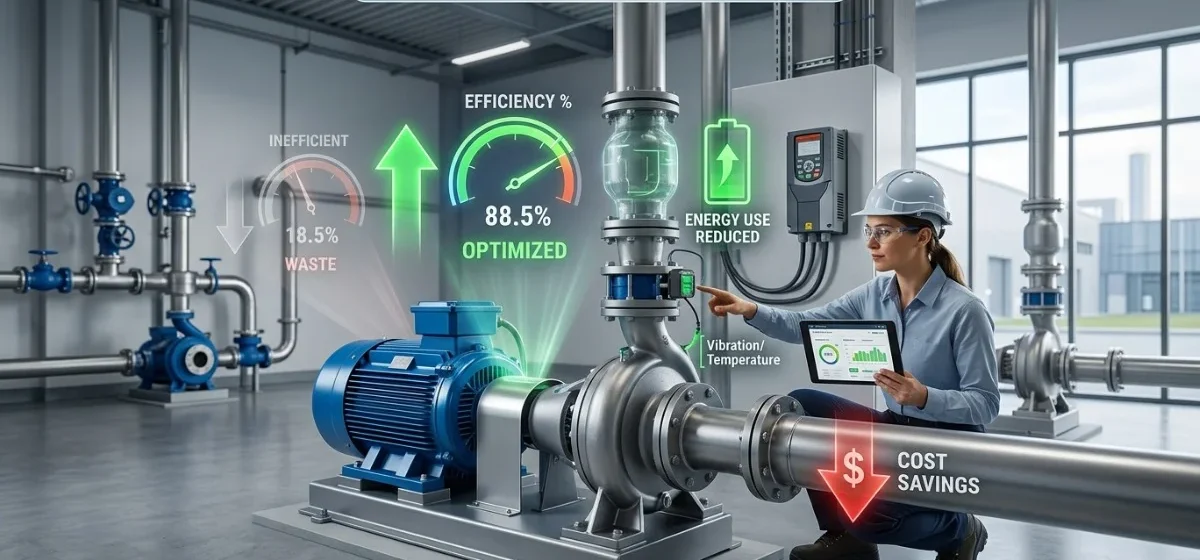
Install Variable Frequency Drives (VFDs)
A Variable Frequency Drive (VFD) allows pumps to adjust speed based on demand.
Benefits of VFD installation include:
- Lower energy consumption
- Reduced mechanical stress
- Better system control
- Improved pump lifespan
In many industrial systems, installing VFDs can reduce pump energy usage by 20–50%.
Upgrade to Energy-Efficient Motors
Older motors are often less efficient than modern designs.
Replacing outdated motors with high-efficiency electric motors can significantly reduce energy consumption while improving performance.
Energy-efficient motors also generate less heat and require less maintenance.
Improve Pipeline Design
Improving the pipeline system can dramatically reduce energy losses.
Consider these improvements:
- Reduce unnecessary pipe bends
- Increase pipe diameter where possible
- Remove flow restrictions
- Maintain clean pipelines
These steps reduce friction losses and allow pumps to operate more efficiently.
Monitor Pump Performance
Monitoring pump performance allows operators to detect efficiency problems early.
Important parameters to track include:
- Flow rate
- Pressure levels
- Power consumption
- Vibration levels
Using modern monitoring tools helps identify problems before they become costly failures.
Energy Savings Opportunities for Industrial Facilities
Industrial facilities such as asphalt plants, concrete plants, and manufacturing units in Saudi Arabia can achieve significant cost savings by improving pump efficiency.
Energy savings can come from:
- Proper pump sizing
- Regular maintenance schedules
- Installing energy-efficient motors
- Using automation and smart monitoring systems
These strategies help companies reduce operational costs while maintaining reliable production processes.
Conclusion
Improving pump efficiency is one of the most effective ways to reduce energy consumption in industrial systems. By selecting the right pump, optimizing system design, maintaining equipment regularly, and implementing technologies like Variable Frequency Drives, companies can significantly lower their operational expenses.
Even small improvements in pump performance can translate into substantial energy savings over time. For industries that rely heavily on fluid transfer systems, investing in efficient pump operation is a smart and practical step toward long-term sustainability.
For more insights and industrial spare parts solutions, visit RoadTRD for reliable equipment and expert support.
Frequently Asked Questions
1. What is the best way to improve pump efficiency?
Operating the pump near its best efficiency point and maintaining it regularly are the most effective methods.
2. How do Variable Frequency Drives reduce energy costs?
VFDs adjust pump speed based on demand, reducing unnecessary energy consumption.
3. Why does pump efficiency decrease over time?
Wear and tear, corrosion, and mechanical damage can gradually reduce efficiency.
4. How often should industrial pumps be maintained?
Most pumps should be inspected every 3–6 months depending on operating conditions.
5. Can upgrading motors improve pump efficiency?
Yes, modern energy-efficient motors consume less electricity and improve system performance.
Call to Action
If your facility relies on industrial pumps, improving efficiency can lead to major energy savings and better system reliability. For high-quality industrial pumps, motors, and spare parts, explore the solutions available at RoadTRD and keep your operations running smoothly.