
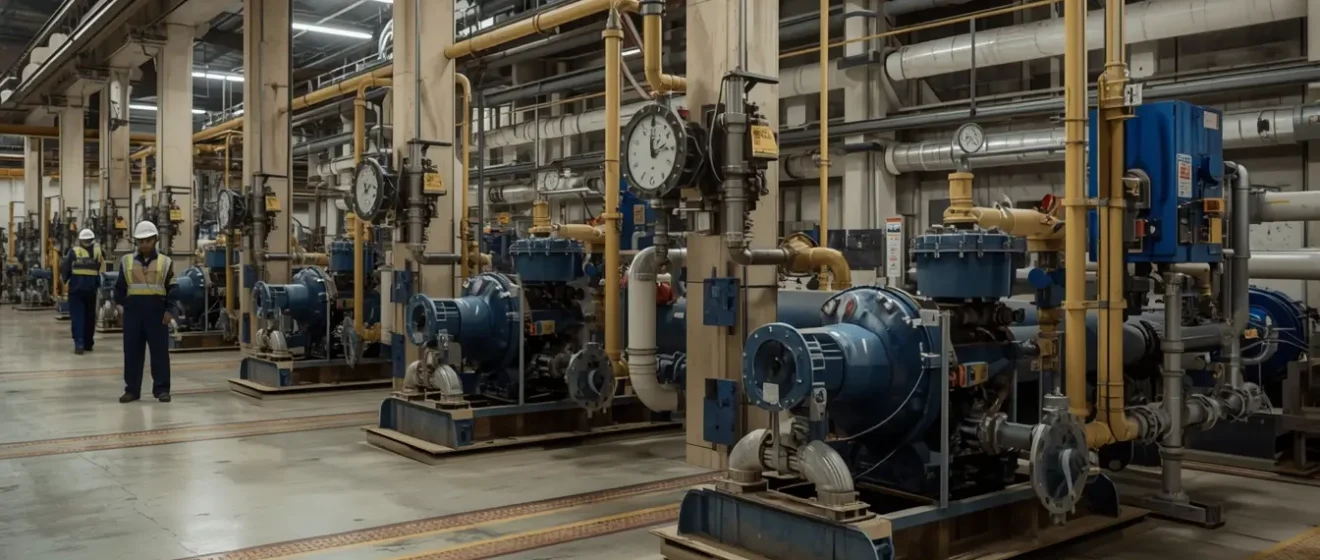
Are your industrial pumps consuming more energy than expected and increasing your operational costs? This is a common challenge faced by many industries across Saudi Arabia, especially in sectors like asphalt plants, concrete batching plants, and manufacturing facilities. Pumps are essential for fluid movement, but when they operate inefficiently, they can significantly raise electricity bills and reduce overall system performance.
The good news is that improving pump efficiency doesn’t always require major investments. With the right strategies, you can reduce energy costs, improve reliability, and extend the life of your equipment.
Why Pump Efficiency Matters
Industrial pumps often account for a large portion of total energy usage in a facility. When a pump operates inefficiently, it consumes more power to deliver the same output.
Improving efficiency leads to:
- Lower electricity bills
- Reduced maintenance costs
- Longer equipment lifespan
- Improved operational reliability
- Better environmental sustainability
For industries in Saudi Arabia, where energy optimization is becoming increasingly important, efficient pump systems can provide a strong competitive advantage.
Common Causes of Low Pump Efficiency
Before improving performance, it’s important to identify the root causes of inefficiency.
Incorrect Pump Sizing
Using a pump that is too large or too small for the application forces it to operate outside its optimal range, increasing energy consumption.
System Design Issues
Poor piping design, excessive bends, or flow restrictions create resistance, making the pump work harder.
Mechanical Wear and Tear
Worn components such as impellers, seals, and bearings reduce performance and increase energy usage.
Lack of Maintenance
Neglected pumps lose efficiency over time due to dirt buildup, corrosion, and internal damage.
Effective Ways to Increase Pump Efficiency
Improving industrial pump efficiency requires a combination of proper equipment selection, system optimization, and regular maintenance.
1. Operate at the Best Efficiency Point (BEP)
Every pump has a Best Efficiency Point (BEP) where it performs optimally with minimal energy consumption.
To achieve this:
- Match pump capacity with system requirements
- Avoid excessive throttling
- Use proper control systems
Operating near BEP ensures maximum output with minimum energy use.
2. Install Variable Frequency Drives (VFDs)
A Variable Frequency Drive (VFD) adjusts pump speed based on demand instead of running at full capacity all the time.
Benefits include:
- Up to 50% energy savings
- Reduced wear on components
- Better control over flow and pressure
VFDs are one of the most effective solutions for reducing energy costs in pump systems.
3. Upgrade to Energy-Efficient Motors
Older motors tend to consume more electricity and generate excess heat.
Switching to high-efficiency electric motors offers:
- Lower energy consumption
- Improved performance
- Reduced maintenance needs
This is especially beneficial for continuously operating industrial systems.
4. Optimize Pipeline Design
The efficiency of a pump is closely linked to the system it operates in.
Improve your piping system by:
- Reducing unnecessary bends
- Increasing pipe diameter where possible
- Eliminating flow restrictions
- Keeping pipelines clean
A well-designed system reduces resistance and allows the pump to operate efficiently.
5. Perform Regular Maintenance
Routine maintenance is essential for keeping pumps running efficiently.
Key maintenance practices:
- Inspect impellers and seals regularly
- Lubricate moving parts
- Check for leaks or corrosion
- Replace worn components on time
Preventive maintenance helps avoid unexpected breakdowns and energy losses.
6. Monitor Pump Performance
Monitoring allows you to detect inefficiencies early.
Track parameters such as:
- Flow rate
- Pressure
- Power consumption
- Vibration levels
Using modern monitoring systems can help identify issues before they become costly problems.
Energy Cost Reduction Strategies for Industries
Industries in Saudi Arabia can achieve significant savings by combining multiple efficiency strategies.
Key approaches include:
- Using properly sized pumps
- Implementing automation systems
- Reducing system resistance
- Investing in energy-efficient components
Even small improvements in efficiency can result in substantial cost savings over time.
Conclusion
Improving pump efficiency is not just about reducing energy consumption—it’s about optimizing your entire system for better performance and reliability. By operating pumps at their best efficiency point, installing Variable Frequency Drives, upgrading motors, and maintaining equipment regularly, businesses can significantly reduce energy costs.
In industries where pumps run continuously, even minor efficiency improvements can lead to major long-term savings.
Frequently Asked Questions
1. What is pump efficiency?
Pump efficiency is the ratio of useful output energy to the input energy consumed by the pump.
2. How can I reduce pump energy consumption?
Use VFDs, maintain equipment regularly, and ensure proper pump sizing.
3. Why is my pump consuming too much electricity?
It may be operating outside its optimal range or have worn components.
4. Are energy-efficient motors worth it?
Yes, they reduce power usage and improve overall system performance.
5. How often should pump maintenance be done?
Typically every 3–6 months, depending on usage.
Call to Action
Want to improve your pump performance and reduce energy costs? Explore reliable industrial solutions and high-quality spare parts at RoadTRD—your trusted partner for efficient and durable pump systems in Saudi Arabia.