
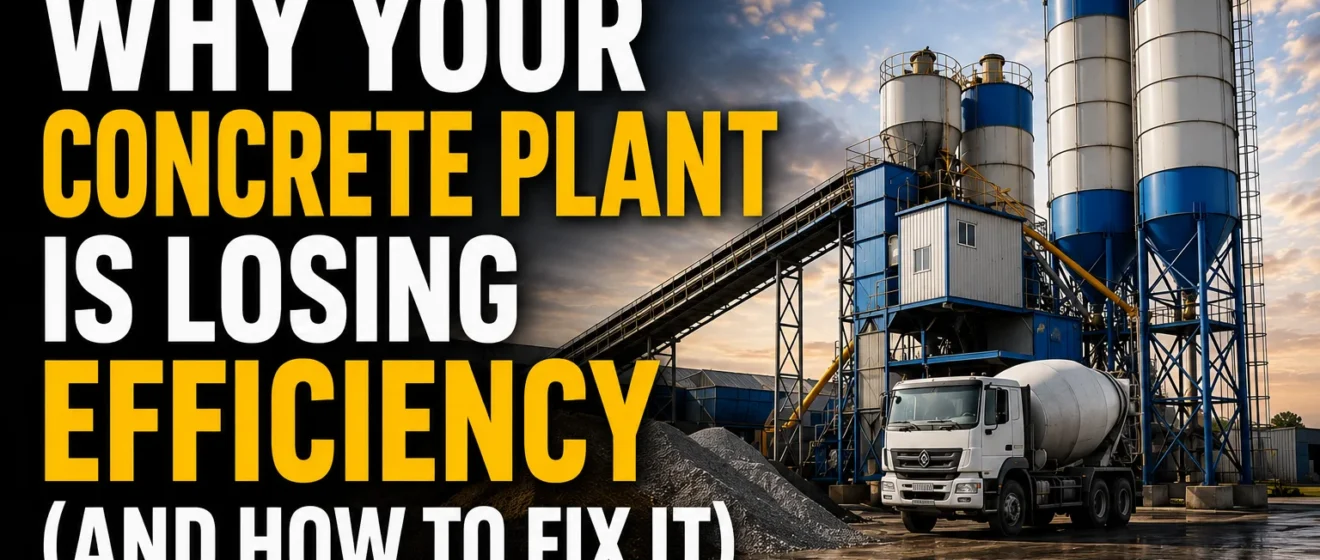
Have you ever wondered why your concrete plant isn’t performing at its best, even though all machines seem to be running fine? You’re not alone. Many plant managers in Saudi Arabia face the frustration of reduced output, inconsistent concrete quality, or frequent downtime. While these issues may seem minor at first, small inefficiencies can snowball into significant losses. The good news? Most of these problems are solvable with the right approach. In this guide, we’ll uncover the most common causes of efficiency loss in concrete plants and provide practical strategies to fix them, so your operation can run smoothly, cost-effectively, and profitably.
Understanding Efficiency in Concrete Plants
Concrete plant efficiency isn’t just about speed. It’s about the balance of quality, productivity, and reliability. A truly efficient plant produces consistent concrete batches on time, minimizes waste, and keeps operating costs in check. When any of these elements falter, the ripple effects can impact your clients, deadlines, and profit margins.
Think of your concrete plant as a living system: each component,material storage, batching, mixing, and dispatch,must work in harmony. When one piece is off, the entire workflow suffers. Let’s explore the most common bottlenecks and actionable ways to resolve them.
Common Causes of Efficiency Loss in Concrete Plants
1. Poor Material Management
The quality and handling of raw materials directly impact your plant’s performance. Inconsistent aggregates, cement, or additives can cause variable concrete strength, wasted batches, and production delays.
Signs of poor material management:
- Frequent changes in concrete slump or strength
- Higher-than-expected waste rates
- Longer mixing times
How to fix it:
- Implement strict inventory tracking and stock rotation.
- Inspect all incoming materials for quality and proper storage.
- Keep separate bins for different material grades to prevent contamination.
Proper material management doesn’t just save money,it ensures every batch meets your client’s expectations.
2. Inaccurate Batching and Weighing
Even minor inaccuracies in batching can cripple your plant’s efficiency. Overweight or underweight cement, sand, or aggregates can lead to inconsistent concrete quality and wasted time.
Indicators of batching problems:
- Slump inconsistencies in concrete
- Frequent re-batching or adjustments
- Unnecessary material waste
Solutions:
- Regularly calibrate all scales and load cells.
- Consider digital batching systems for precision.
- Train operators to spot deviations early and respond immediately.
Precision in batching is the backbone of efficiency,it minimizes errors and guarantees consistent quality.
3. Equipment Wear and Tear
Concrete plants face heavy-duty wear every day. Mixers, conveyors, motors, and belts endure constant abrasive material flow. Over time, small wear points reduce overall efficiency.
Common equipment issues:
- Mixer blades worn down, reducing mixing quality
- Conveyor belts stretching or slipping
- Motors overheating due to friction
Smart fixes:
- Adopt a preventive maintenance schedule based on operating hours.
- Keep a ready stock of critical spare parts.
- Use high-quality replacements designed for your plant’s capacity.
Investing in maintenance not only improves efficiency,it prevents costly breakdowns that can halt production entirely.
4. Inefficient Plant Layout
Your plant’s physical design can make or break efficiency. Long material travel paths, poorly positioned workstations, or cramped staging areas slow operations.
Typical layout challenges:
- Excessive distance between storage bins and the mixer
- Limited truck movement space
- Disorganized material handling areas
How to improve:
- Map your workflow and identify bottlenecks.
- Shorten conveyor and material travel paths.
- Ensure easy access for delivery trucks and loaders.
Even small adjustments in layout can shave minutes off every batch cycle, dramatically boosting daily output.
5. Operational Gaps and Human Error
No matter how advanced your plant, efficiency depends on your people. Inconsistent practices, lack of training, and limited feedback systems are hidden productivity killers.
Common human factors:
- Operators using varied procedures
- Minimal monitoring of plant performance metrics
- Low accountability for batch quality
Ways to improve:
- Standardize procedures and provide hands-on training.
- Implement dashboards and reports to track KPIs like downtime, waste, and production rates.
- Encourage proactive problem-solving and team collaboration.
Well-trained, empowered operators are your plant’s most valuable efficiency tool.
Strategies to Boost Concrete Plant Performance
Preventive Maintenance
Switch from reactive to preventive maintenance. Daily checks of mixers, conveyors, and motors, weekly calibration of scales, and monthly full-system inspections help avoid unexpected breakdowns and extend equipment life.
Embrace Automation
Even mid-sized plants benefit from automation. Digital batching, real-time material tracking, and automated reporting reduce errors, save time, and provide data for continuous improvement.
Monitor Key Performance Metrics
Track KPIs such as:
- Cubic meters produced per hour
- Waste percentage
- Downtime hours
- Energy usage per batch
These metrics reveal inefficiencies and allow data-driven decisions to optimize operations.
Conclusion
Maximizing concrete plant efficiency is about identifying bottlenecks, applying practical solutions, and continually monitoring performance. By addressing material management, batching precision, equipment maintenance, plant layout, and operator practices, you can significantly improve output, quality, and profitability.
Efficiency isn’t a one-time fix,it’s a continuous process. Start with preventive maintenance, standard operating procedures, and selective automation. Small improvements today can lead to substantial gains tomorrow.
FAQs
1. What’s the most common cause of efficiency loss in concrete plants?
Inaccurate batching and inconsistent material quality are usually the biggest culprits.
2. How often should plant equipment be maintained?
Daily inspections for critical parts, weekly calibration for scales, and monthly full-system checks are recommended.
3. Can automation really help small to mid-sized plants?
Yes,automation reduces human error and provides real-time operational insights.
4. Does plant layout affect efficiency?
Absolutely,optimized material flow and workstation placement directly impact production speed.
5. How can I start improving efficiency immediately?
Conduct a workflow audit, standardize procedures, and train operators on best practices.
Call to Action:
Ready to elevate your concrete plant efficiency? Explore expert spare parts, tools and technical support at Road trd today.