
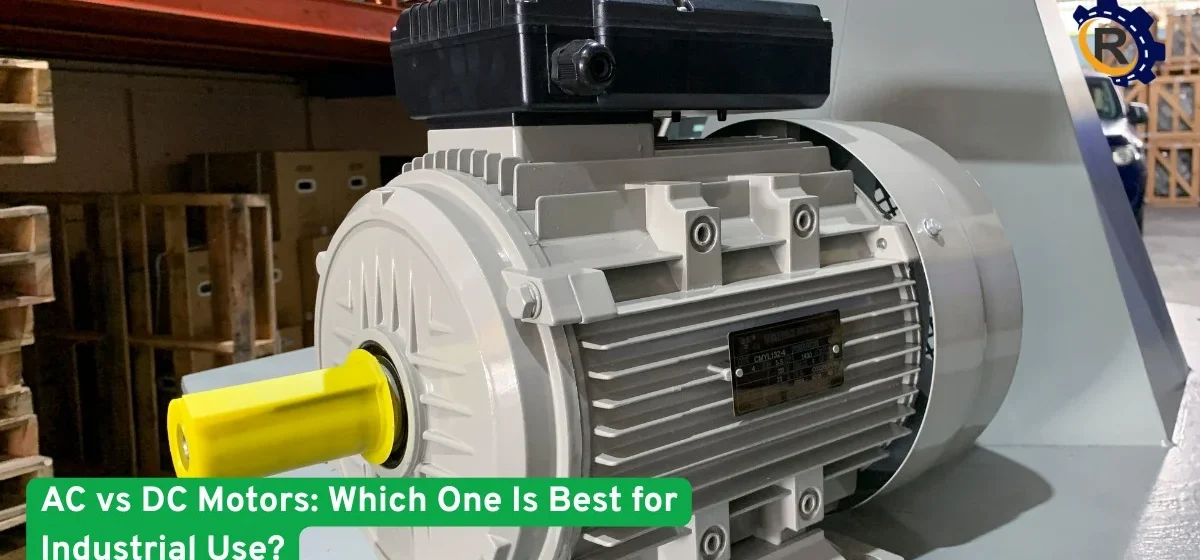
AC vs DC Motors: Best Choice for Industrial Use
Electric motors power nearly every industrial operation across Saudi Arabia, from asphalt plants and batching systems to conveyors and manufacturing lines. When selecting a motor for industrial use, one common question arises: Should you choose an AC motor or a DC motor?
Understanding the differences between AC and DC motors helps ensure better efficiency, lower maintenance costs, and reliable long-term performance.
What Is the Difference Between AC and DC Motors?
The primary difference lies in how they are powered:
- AC Motors (Alternating Current) run on alternating electrical current, which is the standard power supply in most industrial facilities.
- DC Motors (Direct Current) operate on direct current and are often used where precise speed control is required.
Both types have advantages depending on the application.
Advantages of AC Motors
AC motors are the most commonly used motors in industrial environments.
Key benefits include:
- Lower initial cost
- Simple and durable construction
- Minimal maintenance requirements
- Reliable performance for continuous operation
In Saudi Arabia’s heavy industrial sectors, three-phase AC induction motors are widely preferred because they handle high loads and harsh conditions effectively.
Advantages of DC Motors
DC motors are known for their speed control capabilities.
Key benefits include:
- Precise speed regulation
- High starting torque
- Smooth acceleration
They are commonly used in applications that require adjustable speed, such as cranes, elevators, and certain manufacturing systems.
Which Motor Is Better for Industrial Use?
For most heavy industrial applications — including asphalt plants, crushers, and material handling systems — AC motors are typically the better choice.
Reasons include:
- Compatibility with industrial power supply
- Greater durability in harsh environments
- Lower maintenance costs
- Better suitability for continuous-duty operations
However, if your operation requires precise speed control and variable torque performance, a DC motor or an AC motor paired with a Variable Frequency Drive (VFD) may be more suitable.
Key Factors to Consider Before Choosing
Before selecting an AC or DC motor, evaluate:
- Load requirements
- Speed control needs
- Energy efficiency goals
- Environmental conditions
- Maintenance capacity
Consulting with an experienced industrial spare parts supplier ensures the motor selected matches your operational demands.
Conclusion
Both AC and DC motors have important roles in industrial applications. While AC motors dominate heavy industrial environments due to durability and cost efficiency, DC motors remain valuable for applications requiring precise control.
Choosing the right motor is less about which type is “better” and more about which type best fits your plant’s specific operational needs.
Frequently Asked Questions
Q1: Which motor is more commonly used in industrial applications?
AC motors are more commonly used in heavy industrial environments because they are durable, cost-effective, and compatible with standard three-phase power systems.
Q2: Are DC motors more efficient than AC motors?
Not necessarily. Modern AC motors, especially when paired with Variable Frequency Drives (VFDs), offer excellent efficiency and speed control comparable to DC motors.
Q3: Do DC motors require more maintenance?
Yes. Traditional DC motors typically require more maintenance due to brushes and commutators that wear over time.
Q4: Can AC motors provide speed control?
Yes. When combined with a VFD, AC motors can achieve precise speed control suitable for many industrial applications.
Q5: Which motor is better for harsh industrial environments?
AC motors are generally better suited for harsh environments due to their simpler design, durability, and lower maintenance needs.
Call To Action
Need expert guidance in selecting the right motor for your industrial operation in Saudi Arabia?
Visit RoadTRD for high-quality electric motors, technical consultation, and reliable supply across the Kingdom. Ensure optimal performance with the right motor solution for your plant.