
Why do electric motors fail so often in industrial plants, and how can you fix these issues before they disrupt operations? If you’re managing an industrial facility in Saudi Arabia, this question is more than theoretical, it directly impacts productivity, costs and safety. Electric motors are the backbone of industrial systems, powering everything from conveyor belts to pumps. When they fail, downtime can be expensive.
In this guide, we’ll break down the most common electric motors failures and practical fixes you can apply to keep your operations running smoothly.
Understanding the Role of Electric Motors in Industrial Plants
Electric motors are critical components in industries such as:
- Manufacturing plants
- Oil & gas facilities
- Asphalt and concrete plants
- Water treatment systems
They convert electrical energy into mechanical motion, enabling machines to perform essential tasks. Because they operate continuously under demanding conditions, they are prone to wear and tear.
Common Electric Motor Failures
Let’s explore the most frequent issues faced in industrial environments.
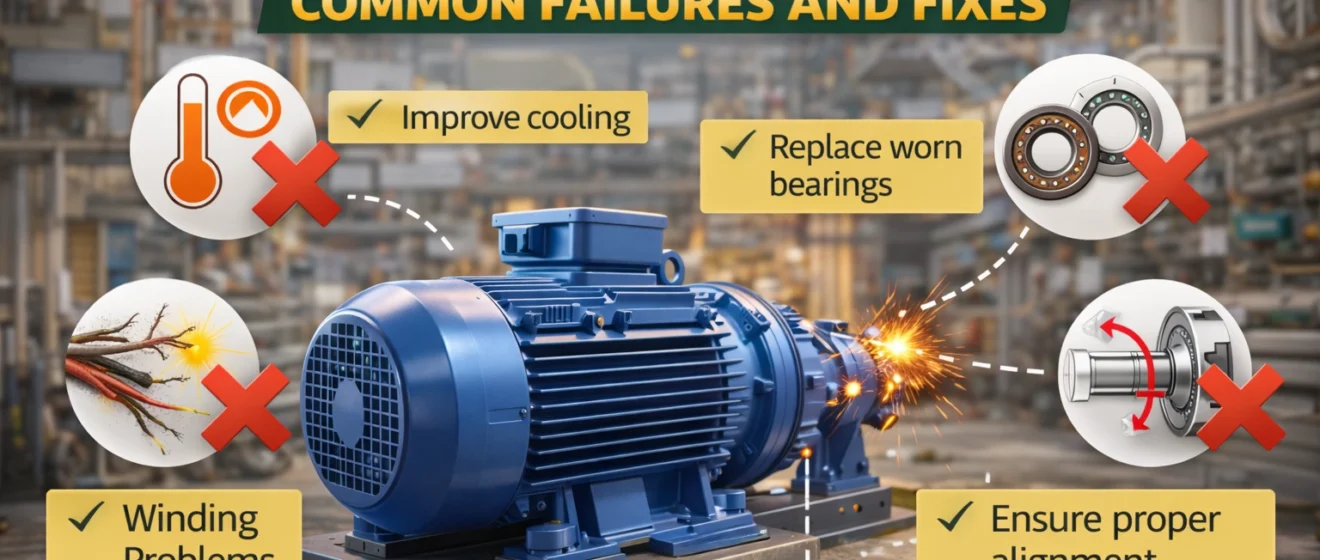
1. Overheating
Overheating is one of the leading causes of motor failure.
Causes:
- Poor ventilation
- Overloading
- High ambient temperatures (common in Saudi Arabia)
- Faulty cooling systems
Fixes:
- Ensure proper airflow around the motor
- Avoid overloading beyond rated capacity
- Regularly clean cooling fans and vents
- Install temperature monitoring systems
2. Bearing Failures
Bearings support the motor shaft and reduce friction. When they fail, the entire motor performance suffers.
Causes:
- Lack of lubrication
- Contamination (dust, moisture)
- Misalignment
Fixes:
- Use high-quality lubricants suitable for industrial conditions
- Schedule routine lubrication
- Replace worn bearings promptly
- Ensure proper shaft alignment
3. Electrical Faults
Electrical issues can damage motor windings and reduce efficiency.
Common problems:
- Voltage imbalance
- Power surges
- Insulation breakdown
Fixes:
- Install voltage stabilizers
- Use surge protection devices
- Conduct regular insulation resistance testing
- Ensure proper grounding
4. Rotor and Stator Issues
The rotor and stator are the core components of an electric motor.
Causes:
- Mechanical stress
- Poor manufacturing quality
- Excessive vibration
Fixes:
- Perform vibration analysis regularly
- Use motors from trusted suppliers
- Replace damaged components early
5. Contamination and Environmental Damage
Industrial environments in Saudi Arabia often involve dust, sand and extreme heat.
Causes:
- Exposure to harsh environments
- Poor sealing
- Lack of maintenance
Fixes:
- Use sealed or IP-rated motors
- Install protective enclosures
- Clean motors regularly
- Conduct preventive maintenance checks
Preventive Maintenance Tips for Long Motor Life
Preventing failures is always more cost-effective than fixing them. Here are some best practices:
Routine Maintenance Checklist
- Inspect motors weekly for unusual noise or vibration
- Check temperature levels during operation
- Lubricate bearings as per schedule
- Tighten electrical connections
- Keep motors clean and dust-free
Advanced Monitoring Techniques
- Use condition monitoring systems
- Implement predictive maintenance tools
- Analyze vibration and thermal data
These strategies help identify issues before they become critical failures.
Choosing the Right Electric Motor for Your Plant
Not all motors are created equal. Selecting the right one can significantly reduce failure risks.
Consider the following:
- Load requirements
- Operating environment
- Energy efficiency ratings
- Manufacturer reliability
In Saudi Arabia, where environmental conditions can be extreme, choosing durable and high-quality motors is essential.
Conclusion
Electric motors are vital to industrial operations, but they are not immune to failure. The most common issues, overheating, bearing damage, electrical faults, rotor problems and environmental contamination can all be managed with proper maintenance and timely intervention.
By understanding these failures and applying the right fixes, you can improve efficiency, reduce downtime and extend the lifespan of your equipment. A proactive approach always pays off in industrial environments.
FAQs
1. What is the most common cause of electric motor failure?
Overheating is the most common issue, often due to overloading or poor ventilation.
2. How often should industrial motors be maintained?
Basic inspections should be done weekly, with detailed maintenance monthly or quarterly.
3. Can dust affect electric motor performance?
Yes, dust and sand can damage internal components and reduce efficiency.
4. How do I know if a motor bearing is failing?
Unusual noise, vibration and increased temperature are key warning signs.
5. Are high-efficiency motors worth it?
Yes, they reduce energy consumption and improve long-term cost savings.
Call to Action
Looking to improve the performance and reliability of your industrial motors? Explore high-quality spare parts and expert solutions at roadtrd today and keep your operations running without interruption.