
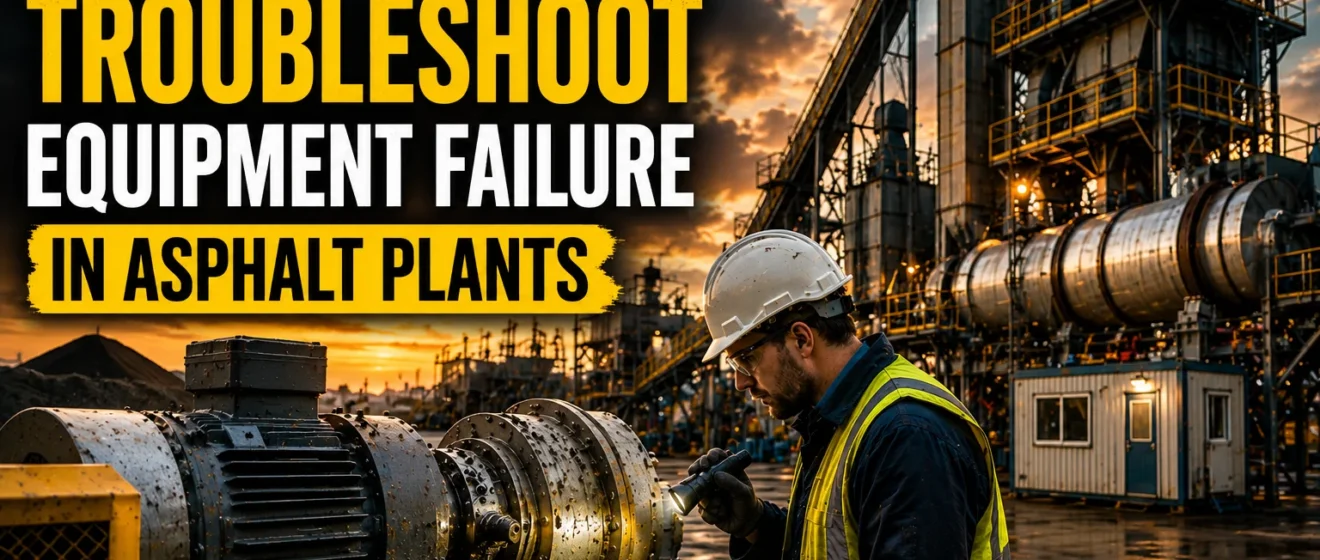
Is your asphalt plant underperforming or facing sudden breakdowns? Equipment failure can cause costly delays, lower productivity, and serious safety concerns, especially in fast-paced construction environments across KSA. Whether you run a small facility or a large-scale plant, quickly identifying and resolving issues is essential to maintaining smooth operations. Even minor faults, if ignored, can lead to major disruptions and expensive repairs.
In this guide, you’ll discover practical, expert-backed methods to troubleshoot asphalt plant equipment effectively, helping you reduce downtime, improve performance, and keep your operations running efficiently without unnecessary interruptions.
Common Causes of Equipment Failure in Asphalt Plants
Before jumping into troubleshooting, it’s important to understand what typically causes failures. Most problems fall into a few key categories:
- Mechanical wear and tear (bearings, belts, gears)
- Electrical faults (wiring issues, control panel failures)
- Poor maintenance practices
- Dust and debris buildup
- Operator error or lack of training
Recognizing these root causes helps you diagnose issues faster and prevent them in the future.
Step-by-Step Guide to Troubleshooting Asphalt Plant Equipment
1. Start with a Visual Inspection
A quick visual check can reveal a lot. Look for:
- Loose or broken components
- Oil leaks or unusual vibrations
- Burn marks or damaged wiring
- Excessive dust accumulation
2. Check the Control System
Modern asphalt plants rely heavily on automated control systems.
- Inspect the PLC (Programmable Logic Controller)
- Verify sensor readings and calibration
- Look for error codes on the display panel
If the system shows inconsistent data, recalibration or software diagnostics may be needed.
3. Inspect Mechanical Components
Mechanical issues are among the most common failures in asphalt plants.
Focus on:
- Bearings: Listen for grinding or unusual noise
- Belts and chains: Check for wear or misalignment
- Motors and reducers: Ensure proper lubrication
Replacing worn-out parts before complete failure can save significant repair costs.
4. Evaluate the Burner System
The burner is the heart of an asphalt plant.
Check for:
- Inconsistent flame or ignition issues
- Fuel supply interruptions
- Blocked nozzles
Poor burner performance can directly impact asphalt quality and production efficiency.
5. Examine Dust Collection Systems
Dust collectors (baghouses) play a crucial role in plant efficiency and environmental compliance.
Common issues include:
- Clogged filter bags
- Damaged ducts
- Reduced airflow
Regular cleaning and timely replacement of filter bags are essential—especially in high-dust regions.
6. Test Electrical Connections
Electrical faults can be tricky but critical.
- Inspect wiring for loose connections
- Check circuit breakers and fuses
- Use a multimeter to test voltage levels
Safety tip: Always disconnect power before handling electrical components.
Preventive Maintenance Tips to Avoid Future Failures
Troubleshooting is important, but prevention is even better. Here’s how to reduce equipment failure in asphalt plants:
Create a Maintenance Schedule
- Daily: Visual checks and cleaning
- Weekly: Lubrication and minor adjustments
- Monthly: Detailed inspection of key components
Train Your Operators
Well-trained staff can identify early warning signs and avoid costly mistakes.
Use Quality Spare Parts
Low-quality parts wear out faster and increase downtime.
Monitor Performance Data
Track temperature, pressure and output regularly to detect anomalies early.
Why Quick Troubleshooting Matters
In Saudi Arabia’s competitive construction industry, delays can lead to:
- Missed project deadlines
- Financial losses
- Damaged reputation
By mastering troubleshooting techniques, you ensure smoother operations and better project outcomes.
Conclusion
Equipment failure in asphalt plants is inevitable, but prolonged downtime doesn’t have to be. By understanding common issues, performing systematic troubleshooting, and investing in preventive maintenance, you can keep your plant running efficiently and safely.
A proactive approach not only reduces repair costs but also improves productivity and asphalt quality. For reliable industrial solutions and spare parts, visit roadtrd for expert support and high-quality equipment.
FAQs
1. What is the most common cause of asphalt plant failure?
Mechanical wear and poor maintenance are the leading causes.
2. How often should asphalt plant equipment be inspected?
Basic inspections should be done daily, with detailed checks monthly.
3. Why is my asphalt plant burner not working properly?
It could be due to fuel supply issues, clogged nozzles, or ignition faults.
4. How can I reduce downtime in my asphalt plant?
Implement preventive maintenance and train operators effectively.
5. Are dust collectors important in asphalt plants?
Yes, they improve efficiency and ensure environmental compliance.
Call to Action
Need reliable spare parts or expert support for your asphalt plant? Explore premium industrial solutions at RoadTRD ,a trusted supplier of high-quality industrial and asphalt plant components, and keep your operations running without interruption.