
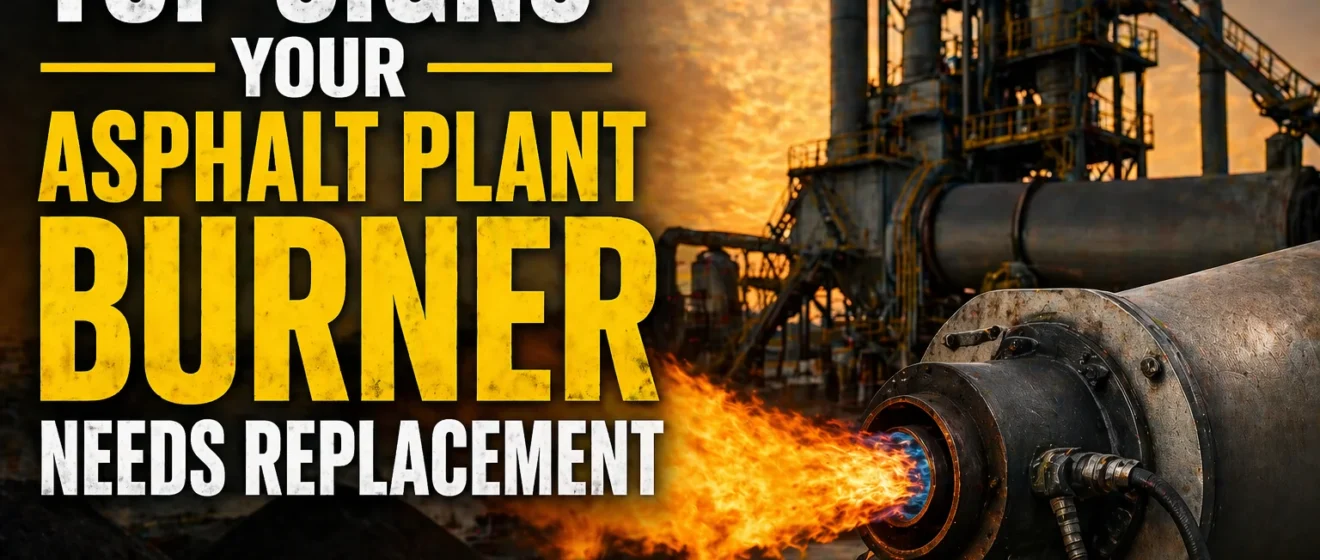
Is your asphalt plant struggling to maintain consistent heat or consuming more fuel than usual? These are often early warning signs that your burner may be failing. In asphalt production, the burner is essential for delivering precise heat, ensuring fuel efficiency, and maintaining consistent output quality. When it starts underperforming, it can lead to higher operating costs, unexpected downtime, and poor asphalt results, especially in harsh conditions like those in Saudi Arabia.
In this guide, we highlight the key signs your asphalt plant burner needs replacement, helping you act early, avoid disruptions, and keep your operations running efficiently.
Why the Asphalt Plant Burner Matters
The burner is essentially the heart of your asphalt plant, responsible for generating the heat needed to dry and process aggregates. A well-functioning burner ensures:
- Consistent asphalt quality
- Optimal fuel consumption
- Reduced emissions
- Smooth plant operations
When the burner starts failing, everything from production efficiency to product quality can suffer.
1. Inconsistent Flame or Temperature Fluctuations
One of the earliest signs of burner trouble is an unstable flame. If you notice temperature swings during operation, your burner may no longer be functioning efficiently.
What to watch for:
- Sudden drops or spikes in heat
- Difficulty maintaining target temperature
- Uneven heating of materials
In Saudi Arabia’s high-temperature environment, stable burner performance is even more critical. Fluctuations can quickly affect asphalt consistency and project timelines.
2. Increased Fuel Consumption
Are your fuel costs rising without an increase in production? This is a strong indicator that your burner is losing efficiency.
Common causes:
- Worn-out nozzles
- Improper fuel-air mixture
- Internal component degradation
A failing burner requires more fuel to produce the same heat output, which can significantly impact operational costs over time.
3. Excessive Smoke or Emissions
A properly functioning burner should operate cleanly. If you’re seeing black smoke or unusual emissions, it’s a clear sign something is wrong.
Possible reasons:
- Incomplete combustion
- Blocked air passages
- Damaged burner components
Beyond performance issues, excessive emissions may also lead to regulatory concerns, particularly as environmental standards continue to tighten.
4. Frequent Breakdowns and Maintenance Issues
If your maintenance team is constantly troubleshooting burner-related problems, it may be time to consider a replacement rather than repeated repairs.
Warning signs:
- Regular shutdowns due to burner faults
- Increasing maintenance costs
- Difficulty sourcing replacement parts
At some point, ongoing repairs become less cost-effective than investing in a new, reliable burner.
5. Delayed Ignition or Startup Problems
A healthy burner should ignite quickly and operate smoothly. If you’re experiencing delayed ignition or startup failures, it could indicate serious internal wear.
What this means:
- Faulty ignition system
- Fuel delivery issues
- Electrical or control system problems
These issues not only slow down production but can also pose safety risks if left unaddressed.
6. Unusual Noises During Operation
Strange noises are often overlooked but can signal internal damage.
Listen for:
- Grinding or rattling sounds
- Sudden loud bursts
- Irregular airflow noises
These sounds typically point to worn-out components or misalignment within the burner system.
7. Reduced Asphalt Quality
Ultimately, your burner’s performance directly impacts the quality of asphalt produced.
Signs of quality issues:
- Improperly dried aggregates
- Inconsistent mix temperature
- Reduced durability of final product
If your output quality is declining despite proper raw materials, your burner could be the root cause.
When Should You Replace Instead of Repair?
While repairs can extend the life of your equipment, there comes a point where replacement is the smarter investment.
Consider replacing your burner if:
- Repairs are frequent and costly
- Efficiency has significantly dropped
- The unit is outdated or unsupported
- Downtime is affecting project deadlines
Upgrading to a modern burner can improve fuel efficiency, automation, and overall plant performance,a critical advantage in Saudi Arabia’s competitive construction sector.
Conclusion
Recognizing the top signs your asphalt plant burner needs replacement can save you from unexpected breakdowns and costly inefficiencies. From inconsistent flames and rising fuel costs to frequent maintenance and declining asphalt quality, these warning signals should never be ignored.
Taking proactive action not only ensures smooth operations but also helps maintain high production standards and profitability. If your burner is showing multiple signs of wear, it’s time to evaluate your options and invest in a reliable replacement.
For dependable industrial solutions and high-quality burner components, consider working with trusted suppliers. Contact RoadTRD for reliable spare parts and expert support.
FAQs
1. How long does an asphalt plant burner typically last?
Most burners last between 8–15 years, depending on usage and maintenance.
2. Can I repair my burner instead of replacing it?
Yes, but frequent repairs can become costly. Replacement is often more efficient long-term.
3. What fuel types are used in asphalt plant burners?
Common fuels include diesel, natural gas, and heavy oil.
4. How often should I inspect my burner?
Routine inspections should be done monthly, with detailed checks annually.
5. Does burner efficiency affect asphalt quality?
Absolutely. A poorly performing burner can lead to inconsistent heating and lower-quality asphalt.
Call to Action
If you’re noticing any of these warning signs, don’t wait for a breakdown to disrupt your operations. Upgrade your equipment with trusted industrial solutions, explore high-quality burner parts and expert support at roadtrd today.